
I saw that today would have been John Coltrane’s 100th birthday. He died on July 17, 1967, just days before I was born. My dad had some jazz albums, but I don’t recall ever hearing him listen to them. I still have a few of them. I should pull them out and give them a spin.
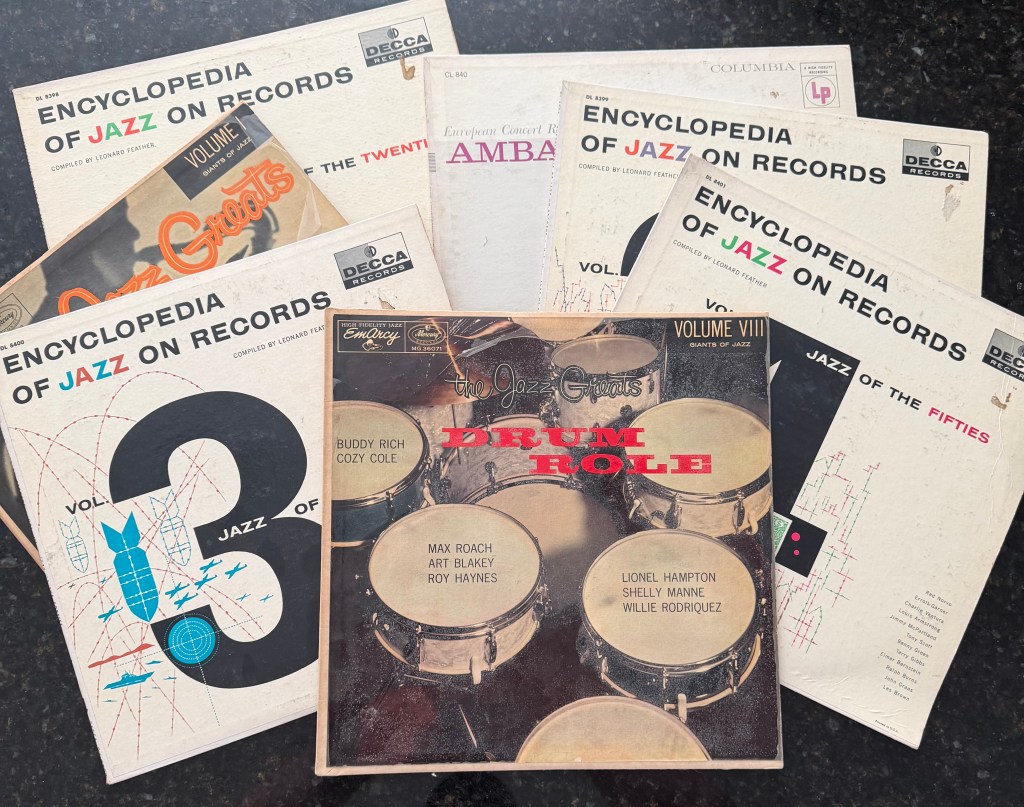
I didn’t really learn to appreciate jazz until college, when I took Dick Wright’s Intro to Jazz class. I mentioned that class in my article My Top 40 Albums of 1986. It didn’t turn me into a jazz expert, but it taught me to appreciate jazz and blues and, more importantly, taught me to listen to all music differently.
Eventually I bought some Coltrane of my own, including Blue Train, My Favorite Things and a greatest-hits collection. I wouldn’t call myself a huge jazz collector, but I’ve collected enough over the years to appreciate it.
What I didn’t realize at the time was how much jazz I already owned.
It was just filed under rock.
The Rolling Stones are a great example. Bobby Keys is a big part of the sound on songs like “Brown Sugar” and “Can’t You Hear Me Knocking.” And then there’s one of my personal favorites, Sonny Rollins playing on “Waiting on a Friend.”
Of course, jazz in rock goes a lot deeper than putting a saxophone on a record.
Steely Dan is a great example. Wayne Shorter, one of the giants of modern jazz, played on “Aja.” Their records are loaded with jazz musicians and jazz influences.
I’ve listened to these songs for years and didn’t realize the connection. To me, they were just great rock songs. I wasn’t thinking about where the sax solo came from or whether a band was improvising. I certainly wasn’t wondering if something I was hearing came from Coltrane.
And it wasn’t just the older records in my collection. I owned Joe Jackson’s Night and Day and Sting’s …Nothing Like the Sun. Both brought jazz influences into the rock and pop music I was listening to in the ’80s. At the time, I wasn’t thinking about any of that. I just liked the records.
Dick Wright’s class eventually helped me recognize what I was hearing: improvisation, extended solos, unusual chords, musicians playing off one another and songs stretching beyond the usual pop structure.
You can hear those jazz influences in the Allman Brothers, Traffic, early Chicago, Santana and the Grateful Dead. That same approach to improvisation carried into jam bands like Phish and the Dave Matthews Band.
John Coltrane was part of the inspiration behind Roger McGuinn’s guitar playing on “Eight Miles High.” That Coltrane’s saxophone could influence the sound of a rock guitar is mind-blowing to me.
Jazz isn’t my favorite genre, but Dick Wright taught me enough to recognize how jazz influenced the music I already owned and the music I would own later.
I went into Intro to Jazz to learn about jazz and get an easy “A.” I didn’t realize I would still be using what I learned in that class almost 40 years later.
One hundred years after Coltrane’s birth, I’m not sure I would even own Blue Train or My Favorite Things if I hadn’t taken Dick Wright’s class. And I hear traces of jazz when I put on the Stones, Steely Dan or many of the other records that aren’t sitting in the jazz section.
Turns out, there was a lot more jazz in my collection than I thought. I just had it filed under rock.
Discover more from Minutes to Memories
Subscribe to get the latest posts sent to your email.


Great piece! I’m like you, I’d been listening to jazz via Sting, Steely Dan, etc for a long time before I realized it. And it wasn’t confined to just the sax – Steely Dan had jazz guitarist Larry Carlton play a lot of solos on their records.
I’m glad you mentioned the Dead and the Allman Brothers etc as I’ve always said they were blues bands who played with a jazz ethos (especially the Allman Brothers… for the Dead it was more when Pigpen was still around). Maybe they were actually hidden jazz bands who played with a blues ethos… The way they play off each other and as you mentioned the improvisation is all very jazz centric. I don’t think any song the Dead, the Allmans, etc play gets played the same way twice.
A friend of mine, when I recently asked him about jazz, said that jazz was like watching soccer… it’s best to just have it on in the background. I would disagree with him, but I often wonder if I’m not smart enough for jazz.
Cheers!
LikeLike
Thanks! I hadn’t thought about Larry Carlton, but that’s another great example. I think that’s what surprised me once I started thinking about this. There was a lot more jazz in the music I was already listening to than I realized.
I like your description of the Allmans and the Dead as blues bands playing with a jazz ethos. That’s probably a better way to describe it than trying to put them into one category or another.
I do agree with your friend about jazz being great background music, though. I used to have a jazz playlist that I would play on Christmas morning. Coltrane’s version of “My Favorite Things” is over 13 minutes long, and it was perfect for that. Of course, Dick Wright would probably be disappointed that I wasn’t listening more closely!
And I’m not sure I’m smart enough for jazz either. I know enough to appreciate it, but there are still times when I’m listening and wondering what everyone else is hearing that I’m missing.
LikeLike