Sometimes I hear the studio version of a song and realize it isn’t the one I’m waiting for.
The song is right. The band is right. But something is missing. Maybe it’s a guitar part, an introduction, or the sound of the crowd. I know what’s supposed to happen next, and then it doesn’t.
That got me thinking about songs whose live recordings became more familiar than the studio versions.
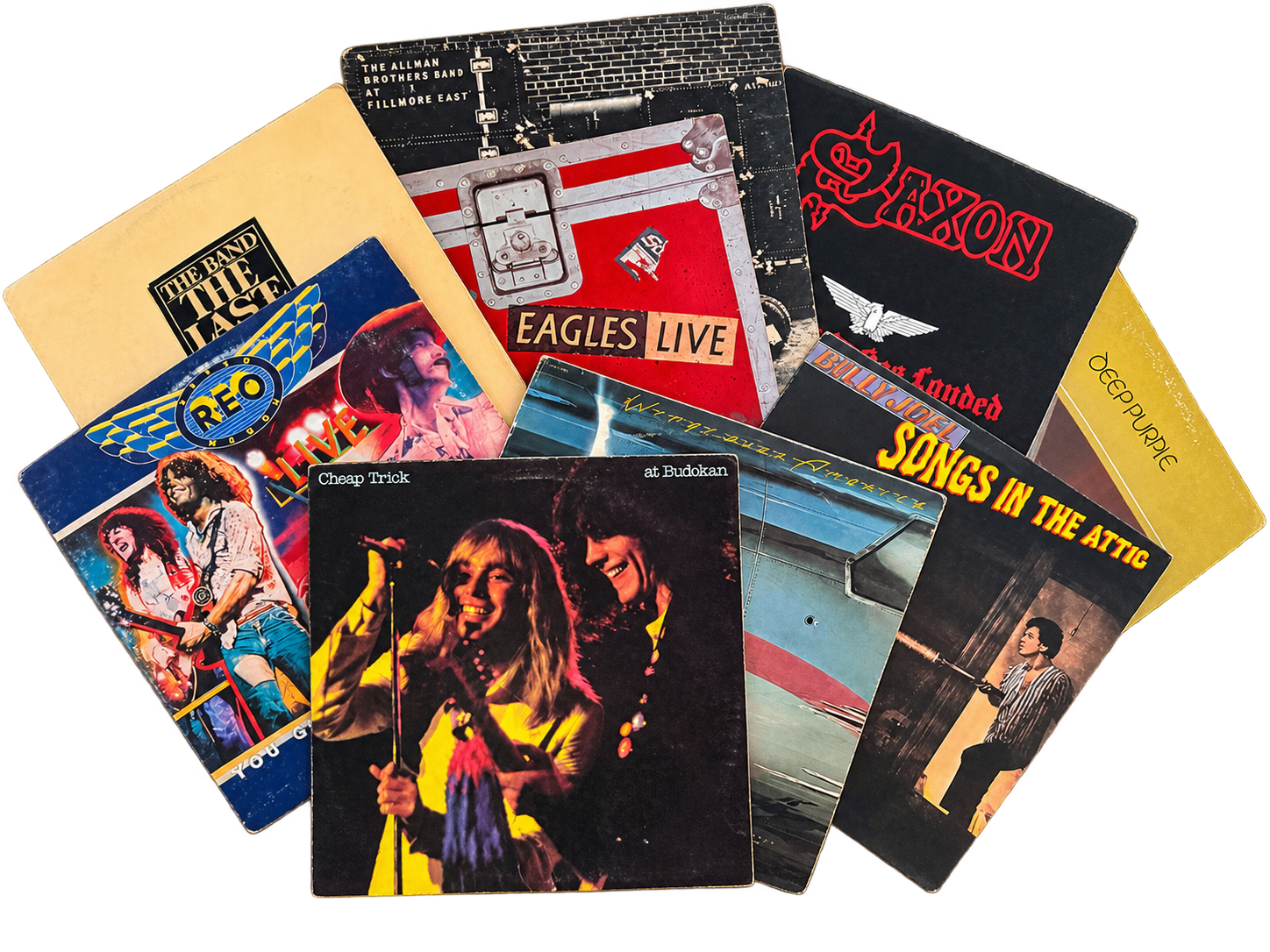
I started with four: REO Speedwagon’s “Ridin’ the Storm Out,” Cheap Trick’s “I Want You to Want Me,” Paul McCartney’s “Coming Up,” and Bob Seger’s “Turn the Page.” Once I started looking through the possibilities, the list kept growing.
I initially had one simple rule. There had to be a studio recording and a live recording by the same artist, and the live version had to have become the bigger hit or the more familiar recording.
But the more I listened, the more I found myself straying from that rule. Some songs became bigger hits in their live versions. Others became the versions I grew up hearing on the radio. And then there are those live recordings that I simply enjoy more than their studio counterparts.
What makes one version of a song more memorable than another can be a pretty personal thing. A lot of that, for me, goes back to the radio station I grew up listening to.
If you grew up in Kansas City listening to rock and roll, chances are you have some memories of KY102. That radio station had a lot to do with shaping my taste in music. In some cases, the version of a song they played became the only version I wanted to hear. Years later, through my friendship with Slacker, I actually got to go into the studio and be on the air. It was a surreal experience and one of those bucket list items I never knew I had. There’s probably an entire article in my memories of KY102, but I’ll save that for another day.
The radio picked the version
“I Want You to Want Me” is an easy place to start. Cheap Trick had already recorded it for In Color, but the version from At Budokan was the one that took off. The live recording has the crowd and the energy that go with it. It sounds like a band having a good night and an audience that knows it. The difference between the studio and live versions reminds me of a scene in one of my favorite movies, That Thing You Do! The Oneders (later the Wonders) practice “That Thing You Do” at a slower tempo, but at the talent show, Guy (Shades) drives the beat and the song takes on a new life. Can you imagine if Bun E. Carlos really did that? That would have been an awesome story.
KISS did something similar with “Rock and Roll All Nite.” The studio recording was already there on Dressed to Kill. Then Alive! gave it a bigger stage, a guitar solo, and a crowd ready to join in. The live single became the bigger hit.
And then there’s Peter Frampton.
He could almost have a section of this article to himself. “Show Me the Way,” “Baby, I Love Your Way,” and “Do You Feel Like We Do” all existed before Frampton Comes Alive!. The live album brought those songs to a much bigger audience. Three songs from one album is a pretty good argument for what a live record can do. To be honest, when I was a kid, I didn’t even know studio versions of these songs existed. All I ever heard on the radio were the live versions.
REO Speedwagon’s “Ridin’ the Storm Out” was one of the first songs that came to mind when I started writing this article. The live version from You Get What You Play For was the version I grew up hearing on KY102. The studio version just doesn’t have the same energy. I swear I remember the DJs on KY102 saying that the live version was recorded in Kansas City. I’ve spent more time than I care to admit trying to verify that, but I haven’t been able to find anything that confirms it. I do know that Kansas City was one of the four locations used to record the album.
Another REO song that got plenty of airplay on KY102 was “157 Riverside Avenue.” The original appeared on their first album, but the live recording takes on a life of its own. Between Gary Richrath’s guitar playing, the piano and Kevin Cronin’s interaction with the audience, it’s almost an entirely different song.
What’s interesting about both of these songs is that Kevin Cronin didn’t sing on either of the original studio recordings. Mike Murphy sang lead on “Ridin’ the Storm Out,” and Terry Luttrell sang lead on “157 Riverside Avenue.” For those of us who grew up listening to the live versions, it’s not just the arrangements that sound different when we hear the studio recordings. Even the voice is different.
Bob Seger’s “Turn the Page” is another one of those songs where the live version became the version I wanted to hear. I have a bootleg copy of Back in ’72 that contains the original studio recording, but it just doesn’t have the urgency and rawness of the performance on Live Bullet.
Then there’s “Travelin’ Man / Beautiful Loser.” Both songs originally appeared on Beautiful Loser, but on Live Bullet they became inseparable for me. Whenever I hear “Travelin’ Man,” I expect to hear “Beautiful Loser” immediately afterward. It’s much the same feeling I get when I hear Queen’s “We Will Rock You” and “We Are the Champions” doesn’t follow it. It just doesn’t feel right. And this is one of the things that made KY102 special. They played a lot of songs back-to-back that you came to expect to hear together. I know there were other stations across the country that did the same thing, but KY102 was Kansas City’s radio station.
On a side note, I wish Bob Seger would open his vault. Between the live recordings, unreleased songs and early albums that have never been officially released on CD, there has to be a treasure trove of music that his fans would love to hear. If Early Seger Vol. 1 is any indication, I’d certainly be interested in hearing more. And since I mentioned Early Seger Vol. 1, put it back on Spotify! Please!
It didn’t always win me over right away
Tom Petty’s “Breakdown” has a different story for me.
The version I’m talking about was recorded in front of a small audience at Capitol Studios in 1977. It was the radio promo performance I remember hearing, and it later appeared on An American Treasure.
More often than not, KY102 played that version instead of the studio recording.
As a kid, I liked the studio version better. Hearing the live recording more often didn’t immediately change my mind. Over time, though, it grew on me. What I wanted from the song changed, even though the recordings stayed the same. Every time I hear “Breakdown,” I’m waiting for someone in the crowd to yell, “Get down on your stereo!” I don’t know who yelled that, but I love it.
“Maybe I’m Amazed” goes the other way for me.
The live version from Wings Over America is often held up as the better recording, and it was the version that became a hit single. I still prefer the studio version from McCartney. It’s more intimate. Don’t get me wrong, the live version is great, but to me, they’re almost two different songs.
I’m keeping it here because this isn’t just a list of my favorite performances. Sometimes the version that became the hit isn’t the one I would choose.
McCartney’s “Coming Up” belongs in the conversation, too. The studio recording appeared on McCartney II, while the live Wings performance from Glasgow was released on the flip side of the single. Radio stations in the United States favored the live version, and it spent three weeks at No. 1 on the Billboard Hot 100.
I bought McCartney II for my dad that Christmas based on the live version of “Coming Up,” not realizing how experimental the album was. Fortunately, the album came with a bonus one-sided 45 of the live version. I think my dad listened to the album once and never again. I still have that original copy in my collection, although I don’t think the 45 is in there anymore.
I also loved the video with Paul and Linda playing several different characters. It was a pretty cool video for its time.
A second chance for a song
Billy Joel took an interesting approach when he released Songs in the Attic in 1981. Rather than putting together a live album of his biggest hits, he went back to his earlier albums. By that time, he’d gained a much larger audience with albums like The Stranger and 52nd Street, and many of those fans weren’t familiar with his earlier material. I was one of those fans. It also gave him a chance to show how those songs sounded with his touring band rather than the session musicians who played on some of the original recordings.
It worked. Both “She’s Got a Way” and “Say Goodbye to Hollywood” became hits in their live versions, reaching No. 23 and No. 17, respectively, on the Billboard Hot 100. We had this album on cassette, and my dad played it often.
Procol Harum’s “Conquistador” had been around since the band’s first album in 1967. It was later released as a single from the band’s 1972 live album Procol Harum Live: In Concert with the Edmonton Symphony Orchestra and peaked at No. 16 on the Billboard Hot 100. Interestingly, when I looked at Spotify, the original studio recording had more plays than the live version.
Fleetwood Mac’s “Silver Springs” took an even longer route. It was originally intended for Rumours, but was left off the album and released as the B-side of “Go Your Own Way” in late 1976. Twenty years later, the performance on The Dance introduced the song to an audience that might never have known what was on the other side of that 45.
My sister didn’t have to wait twenty years to discover it. She flipped the 45 over and had been a fan of the song since it was originally released. It was one of her all-time favorite songs. She bought The Dance on CD and finally got to see Fleetwood Mac on tour around that time. I remember how happy she was after seeing them for the first time after all those years.
This one is a toss-up for me. As much as I enjoy the live performance, if I were forced to choose, I’d still go with the studio version.
The story behind Bruce Springsteen’s “Fire” and “Because the Night” is a little different. Both songs date back to the Darkness on the Edge of Town sessions, but neither made the album. Instead, other artists had hits with them. Patti Smith finished the lyrics to “Because the Night” and took it to No. 13 on the Billboard Hot 100, while the Pointer Sisters took “Fire” all the way to No. 2.
Springsteen released his own live performances of both songs on Live/1975–85 in 1986. My first college roommate, Matt, had the box set and played it all the time. For years, those were the Springsteen versions we had. It wasn’t until the release of The Promise in 2010 that we finally got official releases of those studio recordings.
There’s another twist to “Because the Night.” My favorite live version isn’t Springsteen’s. It’s the one recorded by 10,000 Maniacs for their 1993 MTV Unplugged album. It reached No. 11 on the Billboard Hot 100 and became their biggest hit on that chart. It’s a beautiful version of the song and another example of what a live performance can bring to a familiar recording.
It wasn’t just rock bands
John Denver’s “Thank God I’m a Country Boy” is another one. The studio version originally appeared on Back Home Again in 1974. A year later, the live version from An Evening with John Denver was released as a single and became a No. 1 hit on both the country and pop charts. We had this one on a 45.
Johnny Cash’s “Folsom Prison Blues” goes back a little further than most of these songs. He had a hit with the original Sun Records recording from 1955, which reached No. 4 on the country chart in 1956. The live version from At Folsom Prison gave the song another life in 1968, reaching No. 1 on the country chart and No. 32 on the Billboard Hot 100.
We didn’t have this album growing up, but I have it now. It’s a great live album whether you’re a country music fan or not. My dad had several Sun Records 45s by Johnny Cash and other artists, including Elvis. I’ve often wondered what happened to those old 45s. I wish I had them.
I can credit my wife for this one. Kenny Chesney’s “Back Where I Come From” is another song where I prefer the live version. Chesney originally recorded it for his 1996 album Me and You and later included a live version on his 2000 Greatest Hits album. He introduces it to the audience as his favorite song he’s ever recorded.
Of course, there’s a Jimmy Buffett connection here, too. The song was written and originally recorded by Mac McAnally, who had a country hit with it in 1990. If you’re a Buffett fan, you know that Mac was a longtime member of the Coral Reefer Band and that this song was often played at Jimmy’s concerts.
Interestingly, Chesney never released the song as a single, so there aren’t any chart positions to compare. This is one of those songs that wouldn’t have qualified under my original rule for this article. I just think it sounds better live.
The versions that stick with us
I don’t need every song to win the same argument. Some have chart numbers behind them. Some have years of radio play. Sometimes it’s just personal preference or mood.
What interests me is how a particular recording gets stuck in our heads. Sometimes we choose it. Sometimes the radio chooses it for us. And sometimes, like “Breakdown,” it takes a while to catch up.
While working on this article, I put together a Spotify playlist that includes the songs I’ve mentioned, along with some of my other favorite live recordings. I found myself adding songs that wouldn’t have qualified under my original rule, but they’re songs I love hearing live. And isn’t that what listening to music is all about?
And yes, there’s some Elvis on the playlist. He was an icon and one of my dad’s favorites.
Listen on Spotify: MTM: When the Live Version Became the Version
What are your favorite live versions? Are there any songs where hearing the original studio recording almost seems wrong? What did I miss?
Discover more from Minutes to Memories
Subscribe to get the latest posts sent to your email.

